 Lab Essentials
 AMPIVIEW® RNA probes
 Enabling Your Projects
  GMP Services
 Bulk Solutions
 Research Travel Grant
 Have You Published Using an Enzo Product?
Small Molecule Chemistry

Choose from Over 2,000 Compounds
Natural Products
Enzyme inhibitors
Receptor Ligands
Drugs
Lipids
Fatty Acids
Antagonists
… and much more

Small Molecules Search
Bulk / Custom Sourcing of Compounds
Infinite Possibilities for Customization
New Products

GMP Services
Your reliable partner. Delivering quality products on time.
ISO 9001 & ISO 13485
Common enzyme inhibitors include:
Competitive inhibitors
These molecules compete with the substrate for binding to the enzyme’s active site. They are structurally similar to the substrate and bind to the enzyme with a similar affinity. As a result, they reduce the overall activity of the enzyme by reducing the number of substrate molecules that can bind to the enzyme.
Non-competitive inhibitors
These molecules do not bind to the active site of the enzyme but instead bind to a different site on the enzyme, causing a conformational change that inhibits the enzyme. Non-competitive inhibitors can be reversible or irreversible.
Allosteric inhibitors
These molecules bind to an allosteric site on the enzyme, causing a conformational change that inhibits the enzyme’s activity. Allosteric inhibitors can be competitive or non-competitive.
Irreversible inhibitors: These molecules irreversibly bind to the active site of the enzyme, permanently blocking its activity. An example of an irreversible inhibitor is aspirin, which irreversibly binds to the COX enzyme, preventing it from producing prostaglandins.
Some examples of receptor ligands include
Agonists
These ligands bind to a receptor and activate it, mimicking the effects of the endogenous ligand. Examples of agonists include morphine, adrenaline, and histamine.
Antagonists
These ligands bind to a receptor but do not activate it, preventing the endogenous ligand or agonist from binding and activating the receptor. Examples of antagonists include beta-blockers and antihistamines.
Allosteric modulators
These ligands bind to a different site on the receptor than the endogenous ligand, leading to a conformational change that can enhance or reduce the activity of the target receptor. Examples of allosteric modulators include benzodiazepines.
Inverse agonists: These ligands bind to the same site as the endogenous agonist but have the opposite effect, reducing the basal activity of the receptor.
Latest Articles


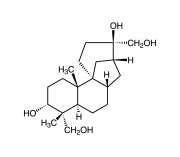
| CAS | 38966-21-1 |
|---|---|
| Couple Type | Inhibitor |
| Purity | ≥98% (TLC) |
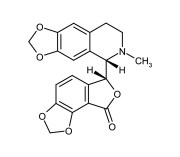
| Alternative Name | D-Bicuculline |
|---|---|
| CAS | 485-49-4 |
| Couple Type | Inhibitor, Ligand |
| Purity | ≥98% (HPLC) |
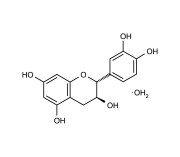
| Alternative Name | (+)-3,3’,4’,5,7-Flavanpentol . H2O |
|---|---|
| CAS | 225937-10-0 |
| Purity | ≥98% (HPLC) |
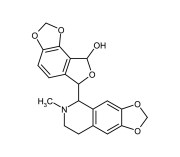
| Alternative Name | 6-(6-Methyl-5,6,7,8-tetrahydro[1,3]dioxolo[4,5-g]isoquinolin-5-yl)-6,8-dihydrofuro[3,4-E][1,3]benzodioxol-8-ol, (+)-Decumbensine |
|---|---|
| CAS | 6883-44-9 |
| Purity | ≥98% (HPLC) |