 Lab Essentials
 AMPIVIEW® RNA probes
 Enabling Your Projects
  GMP Services
 Bulk Solutions
 Research Travel Grant
 Have You Published Using an Enzo Product?
DEEPSEE® FISH Probes
Simpler protocol. Same Day results.
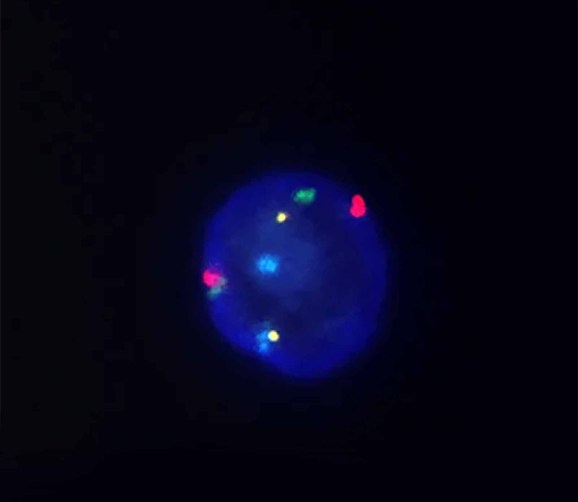
80 ready-to-use, directly labeled FISH probes for detection of chromosomal copy number changes, gene amplifications, deletions, translocations, and rearrangements across hematologic and solid tumor applications.
For Research Use Only (RUO)
Why DEEPSEE®
Built for labs that can’t wait until tomorrow
Every DEEPSEE® probe is designed around one idea: a result shouldn’t take longer to produce than the question that prompted it. From a single vendor, across 80 probes, DEEPSEE® removes the steps that slow labs down — without asking you to change how you work.
2-hour hybridization
Complete hybridization in 2 hours, not the usual overnight 12–16. Start in the morning, get results by afternoon.
Directly labeled
Pre-diluted, ready-to-use probes need no secondary labeling. Apply, hybridize, wash, mount.
24–48 hr delivery
Manufactured under rigorous QC, so a stockout never stalls a case.
80 probes, one vendor
Hematologic malignancies, solid tumors, and chromosomal controls, all from a single validation partner.
Bright, intense signals
High-contrast Orange and Green dyes, plus SEEBRIGHT® DAPI mounting medium, for sharp signals that resist photobleaching.
Instrument compatible
Runs on HYBrite™, ThermoBrite®, or manual protocols. No new equipment required.
How it works
A simplified workflow for same-day results
A streamlined 4-reagent, 5-step process carries a sample from slide to scored signal in about three hours. A single 2-hour hybridization step replaces the overnight incubation required by traditional FISH protocols.
Slide prep
Deparaffinize & pretreat sample.
Probe application
Apply ready-to-use probe, seal slide.
Hybridization
37°C, no overnight incubation.
Wash & mount
Post-hyb wash, DAPI mounting medium.
Fluorescence analysis
Visualize & score signals.
Complete probe catalog
A representative view of the DEEPSEE® line
Hematologic malignancies
| Catalog # | Probe name | Locus / target | Research significance |
|---|---|---|---|
| ENZ-GEN443 | MYC Break Apart Dual Probe | 8q24 (MYC) | Burkitt Lymphoma, DLBCL. Identifies MYC rearrangements; separation of Orange/Green signals indicates break-apart event at 8q24. |
| ENZ-GEN447 | CCND1/IGH Split Extended FISH Probe | 11q13 (CCND1) / 14q32 (IGH) | Mantle Cell Lymphoma. Detects t(11;14) translocation; CCND1/IGH fusion is a hallmark of mantle cell lymphoma. |
| ENZ-GEN448 | BCL6 Break Apart FISH Probe | 3q27 (BCL6) | DLBCL, Follicular Lymphoma. BCL6 rearrangements associate with aggressive B-cell lymphomas. |
| ENZ-GEN450 | IGH/BCL2 Split FISH Probe | 14q32 (IGH) / 18q21 (BCL2) | Follicular Lymphoma. Detects t(14;18), the most common FL translocation, upregulating BCL2. |
| ENZ-GEN451 | D13S319/LAMP1 FISH Probe | 13q14 (D13S319) / 13q34 (LAMP1) | CLL. Del(13q14) is the most frequent cytogenetic abnormality in CLL; favorable prognostic marker. |
| ENZ-GEN452 | IGH Break Apart FISH Probe | 14q32 (IGH) | Multiple Myeloma, B-cell Lymphoma. Screens for any rearrangement at 14q32. |
| ENZ-GEN454 | BCL2 Break Apart FISH Probe | 18q21 (BCL2) | Follicular Lymphoma, DLBCL. t(14;18) is a defining feature of follicular lymphoma. |
| ENZ-GEN457 | BCR/ABL1 FISH Probe | 22q11 (BCR) / 9q34 (ABL1) | CML, ALL (Ph+ leukemia). Detects the Philadelphia chromosome t(9;22); primary target of TKI therapy (imatinib). |
| ENZ-GEN458 | D13S319/LAMP1/CEN12 FISH Probe | 13q14 / 13q34 / CEN12 | CLL Panel. Tri-locus probe for simultaneous assessment of 13q14 deletion with internal CEN12 reference. |
| ENZ-GEN460 | ETV6 Break Apart FISH Probe | 12p13 (ETV6) | ALL, AML, MDS. t(12;21) ETV6/RUNX1 is most frequent translocation in childhood B-ALL. |
| ENZ-GEN462 | ATM/TP53 Extended FISH Probe | 11q22 (ATM) / 17p13 (TP53) | CLL, Mantle Cell Lymphoma. High-risk cytogenetic markers associated with poor prognosis and chemoresistance. |
| ENZ-GEN463 | NUP98 Break Apart Extended FISH Probe | 11p15 (NUP98) | AML, ALL, MDS. Found in ~3% of AML; over 30 fusion partners identified. |
| ENZ-GEN465 | CRLF2 Break Apart FISH Probe | Xp22.3/Yp11.3 (CRLF2) | B-cell ALL (Ph-like). Present in ~5–7% of B-ALL; associated with JAK pathway activation. |
| ENZ-GEN467 | KMT2A Break Apart Extended FISH Probe | 11q23 (KMT2A/MLL) | AML, ALL, MDS, infant leukemia. Over 80 translocation partners; hallmark of infant ALL. |
| ENZ-GEN468 | MYC/IGH Split FISH Probe | 8q24 (MYC) / 14q32 (IGH) | Burkitt Lymphoma, DLBCL (Double Hit). Detects t(8;14); the defining event of Burkitt lymphoma. |
| ENZ-GEN470 | PML/RARA Extended FISH Probe | 15q24 (PML) / 17q21 (RARA) | Acute Promyelocytic Leukemia (APL). Confirms ATRA/arsenic trioxide therapy eligibility. |
| ENZ-GEN472 | ABL1 Break Apart FISH Probe | 9q34 (ABL1) | CML, Ph+ ALL. Also detects NUP214/ABL1 and other ABL1 fusion partners in T-ALL. |
| ENZ-GEN473 | RUNX1T1/RUNX1 Extended FISH Probe | 8q22 (RUNX1T1) / 21q22 (RUNX1) | AML t(8;21). Core-binding factor AML with generally favorable prognosis. |
| ENZ-GEN477 | CBFB Break Apart FISH Probe | 16q22 (CBFB) | AML inv(16)/t(16;16). Identifies CBFB/MYH11 fusion associated with favorable prognosis. |
| ENZ-GEN478 | IGH/MAFB Split Extended FISH Probe | 14q32 (IGH) / 20q12 (MAFB) | Multiple Myeloma. t(14;20) MAFB rearrangement associated with adverse outcome. |
| ENZ-GEN484 | ABL2 Break Apart FISH Probe | 1q25 (ABL2) | ALL, AML. ETV6/ABL2 fusion found in imatinib-sensitive cases of chronic eosinophilic leukemia and ALL. |
| ENZ-GEN486 | BIRC3/MALT1 FISH Probe | 11q22.1 (BIRC3) / 18q21.32 (MALT1) | MALT Lymphoma, CLL. t(11;18) is the most common translocation in MALT lymphoma. |
| ENZ-GEN491 | FGFR3/IGH Split FISH Probe | 4p16 (FGFR3) / 14q32 (IGH) | Multiple Myeloma. t(4;14) in ~15% of myeloma; targetable with FGFR inhibitors. |
| ENZ-GEN492 | 11Q Dual Color/CEN11 FISH Probe | 11q22–11q23 / CEN11 | CLL, MDS. Detects 11q gain and deletion; 11q deletion includes ATM locus. |
| ENZ-GEN493 | DUSP22/IRF4 Break Apart FISH Probe | 6p25.3 (DUSP22) / 6p25.3 (IRF4) | ALK-negative ALCL. Distinguishes favorable- vs adverse-prognosis subsets. |
| ENZ-GEN496 | IGH/MAF Split FISH Probe | 14q32 (IGH) / 16q23 (MAF) | Multiple Myeloma. t(14;16) associated with high-risk disease. |
| ENZ-GEN528 | MALT1 Break Apart FISH Probe | 18q21 (MALT1) | MALT Lymphoma. Screens for any MALT1 rearrangement including t(14;18) and t(11;18). |
| ENZ-GEN536 | ETV6/RUNX1 FISH Probe | 12p13 (ETV6) / 21q22 (RUNX1) | Pediatric B-ALL. Most common chromosomal translocation in childhood ALL (~25%). |
| ENZ-GEN539 | GATA2/MECOM Extended FISH Probe | 3q21 (GATA2) / 3q26 (MECOM/EVI1) | MDS, AML. Defines a high-risk AML subtype. |
| ENZ-GEN549 | ERG Break Apart FISH Probe | 21q22 (ERG) | AML, ALL, Prostate Cancer. Also detects TMPRSS2/ERG fusion in prostate cancer. |
| ENZ-GEN553 | ZNF384 Break Apart FISH Probe | 12p13 (ZNF384) | B-cell ALL. Defines a distinct subtype (~5%); generally intermediate prognosis. |
| ENZ-GEN555 | PBX1/TCF3 FISH Probe | 1q23 (PBX1) / 19p13 (TCF3) | B-cell ALL. t(1;19) found in ~6% of pediatric B-ALL; favorable with intensified therapy. |
| ENZ-GEN449 | TPRG1L/ABL2 FISH Probe | 1p36 (TPRG1L) / 1q25 (ABL2) | 1p/19q Glioma codeletion / Ph-like ALL. Dual-utility probe for CNS and hematologic applications. |
| ENZ-GEN453 | Del 20p20q FISH Probe | 20p11.21 (Control 20) / 20q12 (PTPRT) | MDS, AML, MPN. Isolated del(20q) confers favorable prognosis in MDS. |
| ENZ-GEN455 | 5p5q FISH Probe | 5p15.31 (TAS2R1) / 5q31.2 (EGR1) | MDS (5q syndrome), AML. Isolated del(5q) defines 5q-syndrome responsive to lenalidomide. |
Solid tumors
| Catalog # | Probe name | Locus / target | Research significance |
|---|---|---|---|
| ENZ-GEN541 | ERBB2 (HER2)/CEN17 FISH Probe | 17q12 (ERBB2/HER2) / CEN17 | Breast, Gastric Cancer. HER2/CEN17 ratio guides trastuzumab/pertuzumab/T-DM1 therapy selection. |
| ENZ-GEN444 | MDM2/CEN12 Dual Probe | 12q15 (MDM2) / CEN12 | Liposarcoma, Glioblastoma, Osteosarcoma. Hallmark of well-differentiated/dedifferentiated liposarcoma. |
| ENZ-GEN445 | TP53/CEN17 FISH Probe | 17p13 (TP53) / CEN17 | Multiple Cancers. TP53 deletion is the most common alteration in human cancer. |
| ENZ-GEN446 | MET/CEN7 FISH Probe | 7q31 (MET) / CEN7 | NSCLC, Gastric Cancer. MET amplification targetable with capmatinib, tepotinib. |
| ENZ-GEN456 | USP6 Break Apart FISH Probe | 17p13 (USP6) | Aneurysmal Bone Cyst, Nodular Fasciitis. Pathognomonic for these benign lesions. |
| ENZ-GEN459 | TFE3 Break Apart FISH Probe | Xp11.2 (TFE3) | Renal Cell Carcinoma (Xp11 translocation RCC), Alveolar Soft Part Sarcoma. |
| ENZ-GEN461 | ROS1 Break Apart FISH Probe | 6q22 (ROS1) | NSCLC, Cholangiocarcinoma. Sensitive to ROS1 inhibitors (crizotinib, entrectinib). |
| ENZ-GEN464 | MAML2 Break Apart FISH Probe | 11q21 (MAML2) | Mucoepidermoid Carcinoma. Positive cases have favorable prognosis vs. MAML2-negative. |
| ENZ-GEN466 | NRG1 Break Apart FISH Probe | 8p12 (NRG1) | NSCLC, Breast, Pancreatic Cancer. Targetable with afatinib and zenocutuzumab. |
| ENZ-GEN469 | RET Break Apart FISH Probe | 10q11.2 (RET) | Papillary Thyroid Cancer, NSCLC. Selpercatinib and pralsetinib are RET-specific approved inhibitors. |
| ENZ-GEN475 | FGFR1 Break Apart FISH Probe | 8p12 (FGFR1) | NSCLC, Bladder Cancer, Myeloid/Lymphoid Neoplasms. Defines 8p11 myeloproliferative syndrome. |
| ENZ-GEN479 | RREB1/MYB/CEN6 FISH Probe | 6p25 (RREB1) / 6q23 (MYB) / CEN6 | Melanoma. Distinguishes melanoma from Spitz nevi. |
| ENZ-GEN480 | FGFR1/CEN8 FISH Probe | 8p12 (FGFR1) / CEN8 | Breast, Lung, Bladder Cancer. Amplification in ~10% breast cancer squamous subtype. |
| ENZ-GEN481 | NUTM1 Break Apart FISH Probe | 15q14 (NUTM1) | NUT Carcinoma. Aggressive midline carcinoma in young patients. |
| ENZ-GEN482 | JAZF1 Break Apart FISH Probe | 7p15 (JAZF1) | Endometrial Stromal Sarcoma (Low-grade). JAZF1/SUZ12 t(7;17) in ~45% of low-grade ESS. |
| ENZ-GEN483 | MYB Break Apart FISH Probe | 6q23 (MYB) | Adenoid Cystic Carcinoma, Diffuse Astrocytoma. MYB/NFIB fusion in >85% of adenoid cystic carcinomas. |
| ENZ-GEN485 | PHF1 Break Apart FISH Probe | 6p21 (PHF1) | Endometrial Stromal Sarcoma, Ossifying Fibromyxoid Tumor. |
| ENZ-GEN487 | CSF1R Break Apart FISH Probe | 5q32 (CSF1R) | Tenosynovial Giant Cell Tumor (TGCT/PVNS). Pexidartinib is FDA-approved for TGCT. |
| ENZ-GEN488 | YWHAE Break Apart FISH Probe | 17p13 (YWHAE) | High-grade Endometrial Stromal Sarcoma. More aggressive than JAZF1-rearranged low-grade ESS. |
| ENZ-GEN489 | NR4A3 Break Apart FISH Probe | 9q22 (NR4A3) | Extraskeletal Myxoid Chondrosarcoma. Pathognomonic rearrangements. |
| ENZ-GEN490 | COL1A1/PDGFB Dual Color FISH Probe | 17q21 (COL1A1) / 22q13 (PDGFB) | Dermatofibrosarcoma Protuberans (DFSP). Positive cases are imatinib-responsive. |
| ENZ-GEN494 | CDK4/CEN12 FISH Probe | 12q14 (CDK4) / CEN12 | Liposarcoma, Glioblastoma. Co-occurs with MDM2 amplification. |
| ENZ-GEN495 | FGFR2/CEN10 FISH Probe | 10q26 (FGFR2) / CEN10 | Endometrial Cancer, Gastric Cancer, Cholangiocarcinoma. Targetable with erdafitinib, infigratinib, pemigatinib. |
| ENZ-GEN498 | PDGFB Break Apart FISH Probe | 22q13 (PDGFB) | DFSP. Complement to COL1A1/PDGFB dual-color fusion probe for complete characterization. |
| ENZ-GEN499 | COL1A1 Break Apart FISH Probe | 17q21 (COL1A1) | DFSP. Alternative to the fusion probe for confirmation. |
| ENZ-GEN524 | DDIT3 Break Apart FISH Probe | 12q13 (DDIT3/CHOP) | Myxoid/Round Cell Liposarcoma. FUS/DDIT3 and EWSR1/DDIT3 fusions are pathognomonic. |
| ENZ-GEN525 | EWSR1 Break Apart FISH Probe | 22q12 (EWSR1) | Ewing Sarcoma, Clear Cell Sarcoma, Desmoplastic Small Round Cell Tumor. Broad screening utility across >20 tumor types. |
| ENZ-GEN526 | MYCN/CEN2 FISH Probe | 2p24 (MYCN) / 2q11 (CEN2) | Neuroblastoma, Medulloblastoma, SCLC. MYCN/CEN2 ratio ≥4 defines amplification. |
| ENZ-GEN530 | MYB/CEN6 FISH Probe | 6q23 (MYB) / CEN6 | Adenoid Cystic Carcinoma, Diffuse Astrocytoma (pediatric). MYB copy number assessment. |
| ENZ-GEN531 | FUS Break Apart FISH Probe | 16p11 (FUS) | Myxoid Liposarcoma, Low-grade Fibromyxoid Sarcoma. |
| ENZ-GEN533 | MYC/CEN8 FISH Probe | 8q24 (MYC) / CEN8 | Multiple Cancers (Breast, Lung, Gastric). Ratio to CEN8 identifies high-level amplification. |
| ENZ-GEN537 | NTRK1 Break Apart FISH Probe | 1q23 (NTRK1) | Pan-cancer TRK Fusion. Larotrectinib and entrectinib have pan-cancer approval for NTRK-fusion tumors. |
| ENZ-GEN538 | 19p19q / Glioma FISH Probe | 1p36 / 19q13 (Glioma 1p/19q) | Oligodendroglioma. Co-deletion predicts chemosensitivity (PCV, temozolomide). |
| ENZ-GEN543 | P16/CEN9 FISH Probe | 9p21 (CDKN2A/P16) / CEN9 | Multiple Cancers (Melanoma, Bladder, Lung, GBM). Key biomarker in melanoma and mesothelioma grading. |
| ENZ-GEN440 | CDKN2A/CEN3/7/17 Quad Probe Assay | 9p21.3 / CEN3 / CEN7 / CEN17 | Bladder Cancer (Urothelial Carcinoma). Four targets in a single hybridization. |
| ENZ-GEN548 | KRAS/CEN12 FISH Probe | 12p12 (KRAS) / CEN12 | NSCLC, Colorectal, Pancreatic Cancer. High copy number associated with poorer outcomes. |
| ENZ-GEN550 | FOXO1 Break Apart FISH Probe | 13q14 (FOXO1) | Alveolar Rhabdomyosarcoma (ARMS). Distinguishes alveolar from embryonal RMS with prognostic implications. |
| ENZ-GEN552 | FGFR2 Break Apart FISH Probe | 10q26 (FGFR2) | Cholangiocarcinoma, Endometrial, Gastric Cancer. Pemigatinib is FDA-approved for FGFR2 fusion CCA. |
Chromosomal control & enumeration probes
| Catalog # | Probe name | Locus / target | Research significance |
|---|---|---|---|
| ENZ-GEN471 | Chromosome 9 Control FISH Probe | CEN 9 (9p11-9q11) | Centromere 9 enumeration; reference control for chr9 copy number. |
| ENZ-GEN476 | Chromosome 8 Control FISH Probe | CEN 8 (8p11.1-8q11.1) | Centromere 8 enumeration; reference for MYC/CEN8, FGFR1/CEN8 probes. |
| ENZ-GEN497 | Chromosome 13/18/21 Control FISH Probe | SPEC 13 / CEN 18 / SPEC 21 | Tri-probe panel for simultaneous detection of trisomies 13, 18, and 21. |
| ENZ-GEN529 | Chromosome 03 Control Probe | CEN 3 (3p11-3q11) | Centromere 3 enumeration; internal reference for chr3 copy number assessment. |
| ENZ-GEN534 | Chromosomes X and Y Control Probe | CEN X / CEN Y | Sex chromosome enumeration; gender identification in HSC transplant chimerism, Turner syndrome research. |
| ENZ-GEN542 | Chromosome X/Yq12 Control FISH Probe | CEN X / Yq12 heterochromatin | Enhanced sex chromosome assessment targeting Yq12 heterochromatin. |
| ENZ-GEN554 | Chromosome 4/10/17 Control FISH Probe | 4p11 / CEN 10 / CEN 17 | Tri-chromosome panel for FSHD and neurological disorder chromosomal studies. |
That’s our full line of 80 probes. Use the search bar above to find yours, or download the complete brochure.
Technical reference
Technical specifications
Format & composition
| Format | Pre-diluted hybridization solution |
| Labeling | Directly labeled (no secondary detection) |
| Buffer | Formamide-based hybridization buffer |
| Volume per test | 10 µL per reaction |
| Dye system | Orange / Green (probe-dependent) |
Sample compatibility
- FFPE tissue sections
- Cytological preparations
- Metaphase chromosomes
- Interphase nuclei
- Bone marrow smears
Storage & delivery
| Shipping | Dry ice |
| Short-term storage | 2–8°C, protected from light |
| Long-term storage | −20°C |
| Regulatory status | RUO — not for use in diagnostic procedures |
| Delivery | 24–48 hr |
Get in touch
Technical and Application Support
Questions about a probe, protocol, or your results? Our technical and application support team is ready to help.
Volume pricing and institutional accounts
High-throughput labs and institutional accounts can access tiered pricing, standing orders, and blanket purchase agreements.
Nick translation DNA labeling system 2.0
ENZ-GEN111
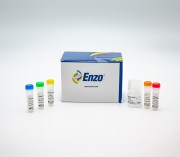
Nick translation system for preparing FISH probes
| Application | FISH, ISH (in situ hybridization) |
|---|
Latest Articles