IP3 receptor inhibitor
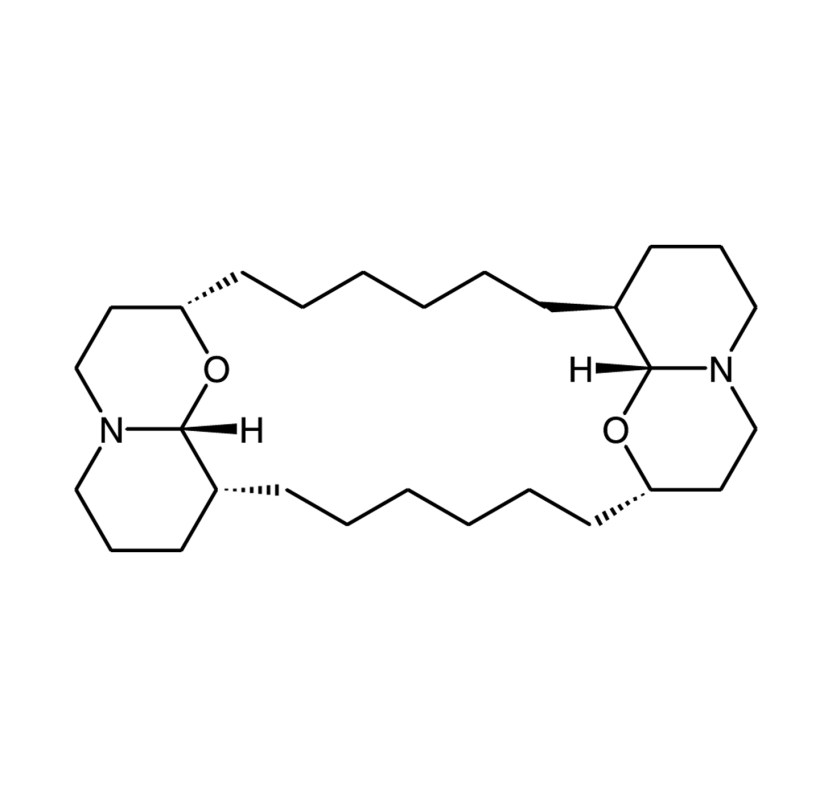
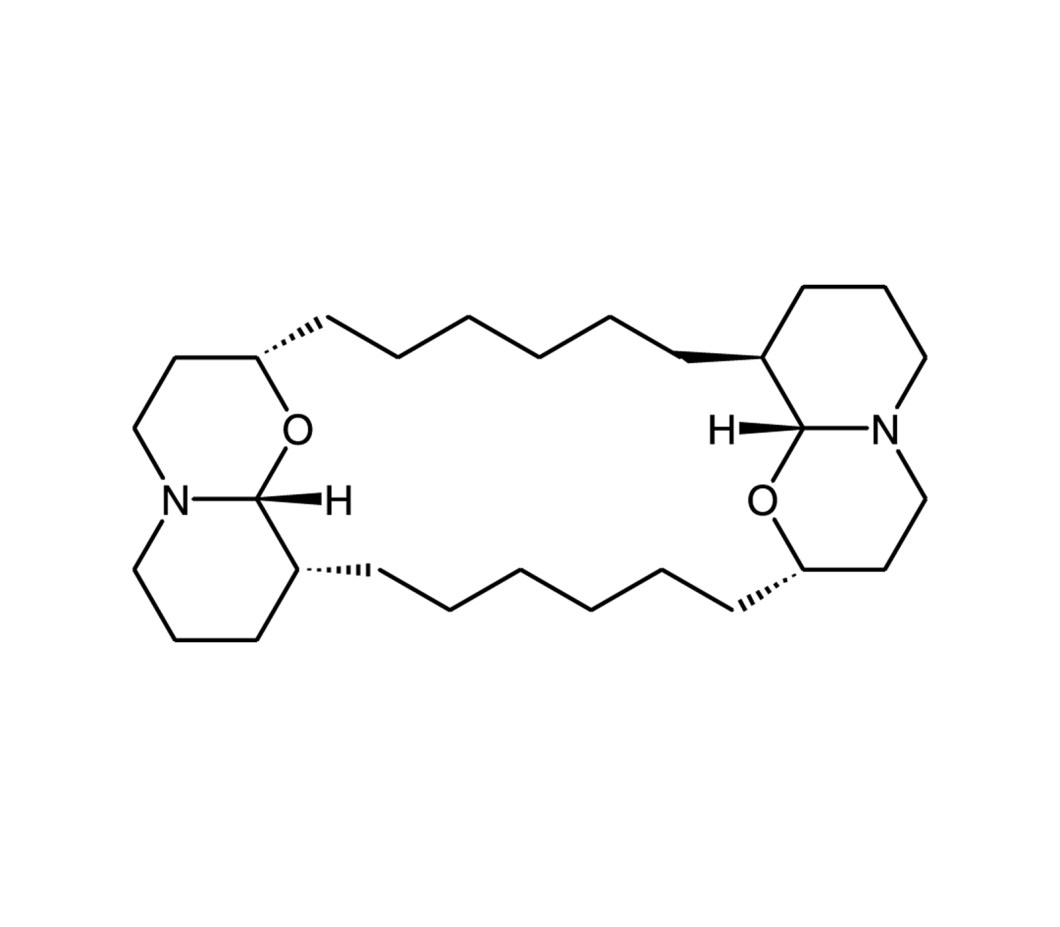
Xestonspongin C is a structurally novel marine alkaloid isolated from the Okinawan sponge Xestospongia sp. It is a potent, cell-permeable inhibitor of IP3 receptor-mediated Ca2+ release (IC50 = 358 nM). However, since xestospongin C also inhibits voltage-dependent Ca2+ and K+ currents at concentrations similar to those which inhibit the IP3 receptor, it can only be regarded as a selective blocker of the IP3 receptor in permeabilized cells and not in cells with intact plasma membranes. Has vasodilatory properties.
Shipping: Available products typically ship within 24/48h, via priority shipping.
Do you need support? Contact Customer Service or Technical Support.
Online Account
Access or Create Your Account
Product Details
| Appearance |
White to off-white powder. |
|---|---|
| CAS |
88903-69-9 |
| Couple Target |
IP3 receptor |
| Couple Type |
Inhibitor |
| Formula |
C28H50N2O2 |
| MW |
446.7 |
| Purity |
≥90% (TLC) |
| Solubility |
Soluble in DMSO or 100% ethanol at 2mM. |
| Source |
Synthetic. |
Handling & Storage
| Use/Stability |
As indicated on product label or CoA when stored as recommended. |
|---|---|
| Handling |
Protect from light. Packaged under inert gas. |
| Long Term Storage |
-20°C |
| Shipping |
Blue Ice |
| Regulatory Status |
RUO – Research Use Only |
|---|
- Luminal H2O2 promotes ER Ca2+ dysregulation and toxicity of palmitate in insulin-secreting INS-1E cells: S. Sharifi, et al.; FASEB J. 37, e22685 (2023), Abstract
- The endoplasmic reticulum, not the pH gradient, drives calcium refilling of lysosomes: Garrity, A. G., Wang, W., et al.; Elife 5, (2016), Abstract
- Layer-specific potentiation of network GABAergic inhibition in the CA1 area of the hippocampus: Colavita, M., Terral, G., et al.; Sci. Rep. 6, 28454 (2016), Abstract
- Type 1 inositol (1,4,5)-trisphosphate receptor activates ryanodine receptor 1 to mediate calcium spark signaling in adult mammalian skeletal muscle: Tjondrokoesoemo, A., Li, N., et al.; J. Biol. Chem. 288, 2103 (2013), Abstract
- Optogenetic probing and manipulation of the calyx-type presynaptic terminal in the embryonic chick ciliary ganglion: Egawa, R., Hososhima, S., et al.; PLoS One 8, e59179 (2013), Abstract
- Activation of muscarinic M3 receptors inhibits large-conductance voltage- and Ca2+-activated K+ channels in rat urinary bladder smooth muscle cells: Parajuli, S. P., Petkov, G. V., et al.; Am. J. Physiol. Cell Physiol. 305, C207 (2013), Abstract
- Pituitary adenylate cyclase-activating polypeptide induces postsynaptically expressed potentiation in the intra-amygdala circuit: Cho, J. H., Zushida, K., et al.; J. Neurosci. 32, 14165 (2012), Abstract
- Induction of Ca²+-driven apoptosis in chronic lymphocytic leukemia cells by peptide-mediated disruption of Bcl-2-IP3 receptor interaction: Zhong, F., Harr, M. W., et al.; Blood 117, 2924 (2011), Abstract
- Air bubble contact with endothelial cells in vitro induces calcium influx and IP3-dependent release of calcium stores: Sobolewski, P., Kandel, J., et al.; Am. J. Physiol. Cell Physiol. 301, C679 (2011), Abstract
- Xestospongin C empties the ER calcium store but does not inhibit InsP3-induced Ca2+ release in cultured dorsal root ganglia neurones: N. Solovyova, et al.; Cell Calcium 21, 49 (2002), Abstract
- Xestospongin C is a potent inhibitor of SERCA at a vertebrate synapse: A. Castonguay & R. Robitaille; Cell Calcium 32, 39 (2002), Abstract
- Inhibitory mechanism of xestospongin-C on contraction and ion channels in the intestinal smooth muscle: H. Ozaki, et al.; Br. J. Pharmacol. 137, 1207 (2002), Abstract
- Xestospongin C, a selective and membrane-permeable inhibitor of IP(3) receptor, attenuates the positive inotropic effect of alpha-adrenergic stimulation in guinea-pig papillary muscle: S. Miyamoto, et al.; Br. J. Pharmacol. 130, 650 (2000), Abstract
- In vivo signal transduction of nociceptive response by kyotorphin (tyrosine-arginine) through Galpha(i)- and inositol trisphosphate-mediated Ca(2+) influx: H. Ueda & M. Inoue; Mol. Pharmacol. 57, 108 (2000), Abstract
- Ca2+ entry mediated by store depletion, S-nitrosylation, and TRP3 channels. Comparison of coupling and function: D.B. van Rossum, et al.; J. Biol. Chem. 275, 28562 (2000), Abstract
- Xestospongin C is an equally potent inhibitor of the inositol 1,4,5-trisphosphate receptor and the endoplasmic-reticulum Ca(2+) pumps: P. De Smet, et al.; Cell Calcium 26, 9 (1999), Abstract
- New developments in the molecular pharmacology of the myo-inositol 1,4,5-trisphosphate receptor: A. Wilcox, et al.; Trends Pharmacol. Sci. 19, 467 (1998), Abstract
- Xestospongins: potent membrane permeable blockers of the inositol 1,4,5-trisphosphate receptor: J. Gafni, et al.; Neuron 19, 723 (1997), Abstract
- Structures of xestospongin A,B,C and D, novel vasodilativecompounds from marine sponge, Xestospongia exigua: M. Nakagawa, et al.; Tetrahedron Lett. 25, 3227 (1984)
- Clinical and hematological studies on twelve cases of secondary aplastic anemia: M. Kobayashi, et al.; Nippon Ketsueki Gakkai Zasshi 47, 195 (1984), Abstract
Related Products
| CAS | 38966-21-1 |
|---|---|
| Couple Type | Inhibitor |
| Purity | ≥98% (TLC) |
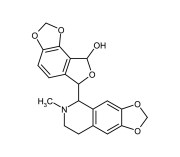
| Alternative Name | 6-(6-Methyl-5,6,7,8-tetrahydro[1,3]dioxolo[4,5-g]isoquinolin-5-yl)-6,8-dihydrofuro[3,4-E][1,3]benzodioxol-8-ol, (+)-Decumbensine |
|---|---|
| CAS | 6883-44-9 |
| Purity | ≥98% (HPLC) |
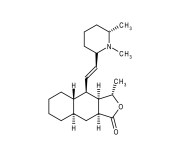
| Alternative Name | (3S,3aR,4R,4aS,8aR,9aS)-4-[(1E)-2-[(2R,6S)-1,6-Dimethyl-2-piperdinyl]ethenyl]decahydro-3-methyl-naphtho[2,3-c]furan-1(3H)-one |
|---|---|
| CAS | 6879-74-9 |
| Couple Type | Inhibitor |
| Purity | ≥98% |
Last modified: May 29, 2024
Datasheet, Manuals, SDS & CofA
Manuals And Inserts
Certificate of Analysis
Please enter the lot number as featured on the product label
SDS
Enzo Life Science provides GHS Compliant SDS
If your language is not available please fill out the SDS request form
Lab Essentials
AMPIVIEW® RNA probes
Enabling Your Projects
GMP Services
Bulk Solutions
Research Travel Grant
Have You Published Using an Enzo Product?